
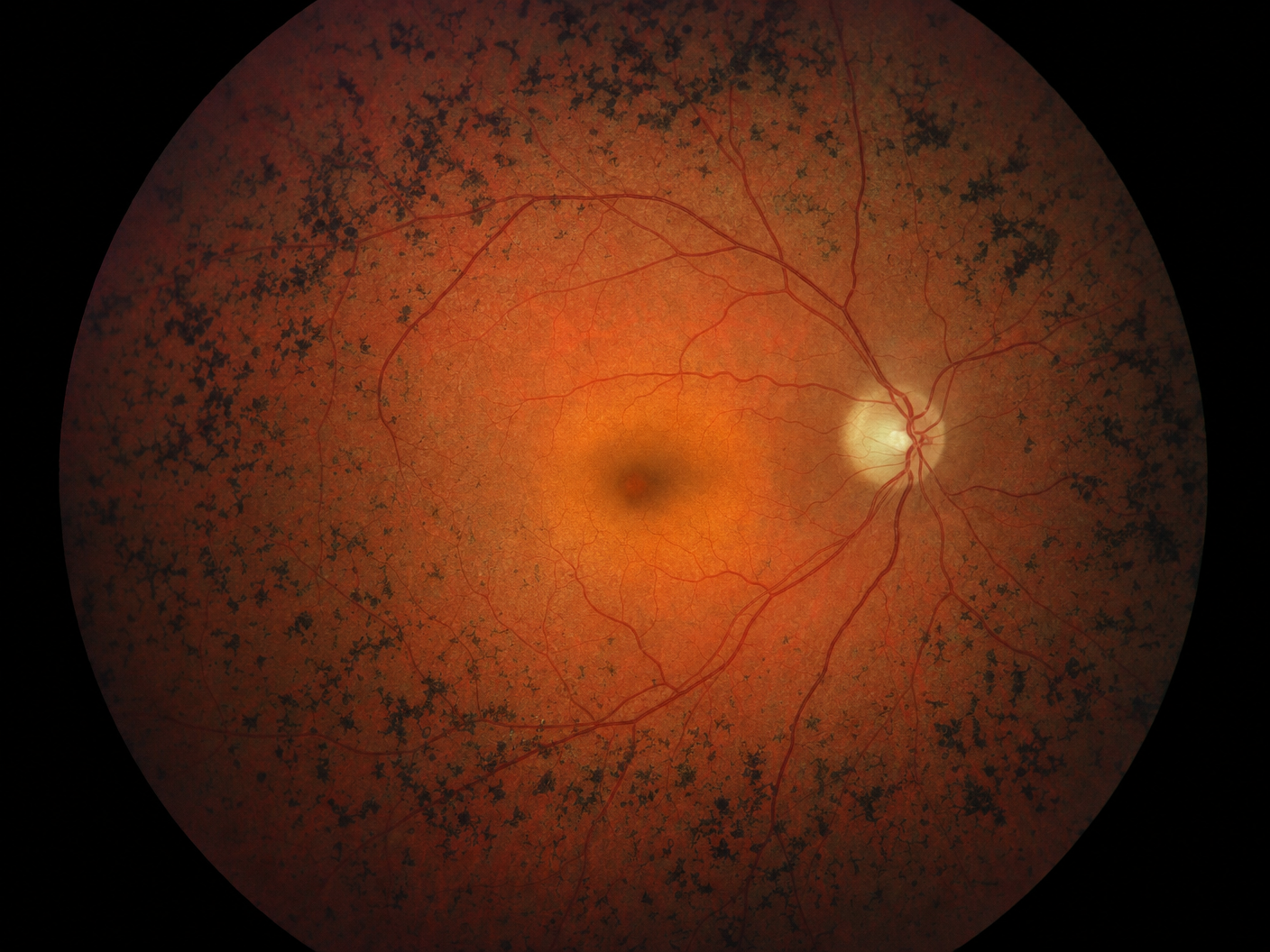
Retinitis Pigmentosa
What is Retinitis Pigmentosa?
Retinitis Pigmentosa (RP) is a group of rare, inherited eye disorders that cause progressive degeneration of the retina, the light-sensitive tissue at the back of the eye. This condition primarily affects the photoreceptor cells (rods and cones) responsible for converting light into electrical signals that are sent to the brain. Over time, these cells slowly deteriorate, leading to a gradual and irreversible loss of vision. RP is a leading cause of inherited blindness, affecting approximately 1 in 4,000 people worldwide. At Barossa Eye Clinic in Gawler, South Australia, our ophthalmologists, Dr. Deric De Wit and Dr. Andrew Laming, are dedicated to diagnosing and managing complex retinal conditions like RP, helping patients understand their condition and explore available management strategies.
Symptoms
The symptoms of Retinitis Pigmentosa typically develop gradually and can vary in severity and progression among individuals. The earliest and most common symptom is nyctalopia, or night blindness, which often begins in childhood or adolescence. Individuals may find it difficult to see in dim light or adapt to changes in lighting conditions. As the disease progresses, other symptoms emerge:
- Peripheral Vision Loss (Tunnel Vision): The loss of side vision is a hallmark of RP, making it challenging to navigate in unfamiliar environments, detect objects outside the central gaze, and can lead to frequent bumping into objects.
- Central Vision Loss: In later stages, the cone photoreceptors, responsible for sharp central vision and color perception, can also be affected, leading to difficulty with reading, recognizing faces, and performing detailed tasks.
- Photophobia: Increased sensitivity to bright light.
- Glare: Difficulty seeing in bright light due to excessive scattering of light within the eye.
- Color Vision Deficiencies: Some individuals may experience a reduced ability to distinguish colors.
Causes/Risk Factors
Retinitis Pigmentosa is primarily a genetic disorder, meaning it is caused by inherited mutations in one or more genes. Over 100 different genes have been identified that can cause RP, and these genes play crucial roles in the development and function of photoreceptor cells. The inheritance patterns can vary:
- Autosomal Dominant: One copy of the altered gene in each cell is sufficient to cause the disorder. Often, one parent has the condition.
- Autosomal Recessive: Both copies of the gene in each cell must be altered to cause the disorder. Parents may be carriers but not show symptoms.
- X-linked: The altered gene is located on the X chromosome. This form primarily affects males, while females are typically carriers.
In some cases, RP can occur spontaneously without a known family history (sporadic cases), or it can be part of a broader syndrome affecting other parts of the body, such as Usher syndrome (RP combined with hearing loss).
Diagnosis
Diagnosing Retinitis Pigmentosa involves a comprehensive eye examination and specialized tests performed by an ophthalmologist. At Barossa Eye Clinic, our experienced team utilizes advanced diagnostic tools to accurately identify RP and monitor its progression. Key diagnostic procedures include:
- Dilated Eye Exam: The ophthalmologist examines the retina for characteristic changes, such as pigment clumps (bone spicule-like pigmentation), thinning of retinal blood vessels, and optic disc pallor.
- Electroretinography (ERG): This test measures the electrical activity of the retina in response to light. In RP, ERG responses are typically reduced or absent, indicating photoreceptor dysfunction.
- Visual Field Testing: This test assesses peripheral and central vision to map out areas of vision loss.
- Optical Coherence Tomography (OCT): OCT provides high-resolution cross-sectional images of the retina, allowing for detailed assessment of retinal thickness and structure.
- Genetic Testing: Identifying the specific gene mutation responsible for RP can help confirm the diagnosis, predict disease progression, and inform potential future gene therapies. This is often recommended for patients and their families.
Treatment
Currently, there is no cure for Retinitis Pigmentosa, but significant advancements in research have led to several promising treatments and management strategies aimed at slowing progression and preserving vision. Our ophthalmologists at Barossa Eye Clinic in the Barossa Valley work closely with patients to develop personalized management plans. Treatment options may include:
- Vitamin A Palmitate: Some studies suggest that high doses of Vitamin A palmitate may slow the progression of RP in certain forms, though it is not suitable for all patients and must be taken under medical supervision due to potential side effects.
- Lutein and Zeaxanthin: These antioxidants, found in leafy green vegetables, may help protect retinal cells.
- Gene Therapy: Luxturna (voretigene neparvovec) is an FDA-approved gene therapy for a specific type of RP caused by mutations in the RPE65 gene. This therapy can improve vision in eligible patients.
- Retinal Implants (Bionic Eye): Devices like the Argus II retinal prosthesis can restore some functional vision in individuals with very advanced RP, allowing them to perceive light and distinguish shapes.
- Low Vision Aids: Magnifiers, telescopic lenses, specialized lighting, and electronic devices can help individuals maximize their remaining vision and improve quality of life.
- Rehabilitation Services: Occupational therapy and orientation and mobility training can help individuals adapt to vision loss and maintain independence.
- Clinical Trials: Participation in ongoing clinical trials offers access to cutting-edge treatments and contributes to research efforts to find a cure.
When to seek help
If you or a family member experience any symptoms suggestive of Retinitis Pigmentosa, particularly night blindness or a noticeable loss of peripheral vision, it is crucial to seek prompt evaluation from an ophthalmologist. Early diagnosis and intervention can help manage the condition and explore available treatment options. Regular eye check-ups are also important, especially if there is a family history of RP. The team at Barossa Eye Clinic in Gawler, South Australia, is here to provide comprehensive eye care and support.
FAQ
Q: Is Retinitis Pigmentosa always inherited?
A: While most cases of Retinitis Pigmentosa are inherited, some individuals may develop the condition without a known family history, which is referred to as a sporadic case. Genetic counseling can help determine the inheritance pattern and risk for family members.
Q: Can Retinitis Pigmentosa be cured?
A: Currently, there is no complete cure for Retinitis Pigmentosa. However, ongoing research and advancements in treatments like gene therapy and retinal implants offer hope for slowing progression and improving vision in some patients. Management focuses on preserving existing vision and maximizing quality of life.
Q: How quickly does vision loss progress with RP?
A: The rate of vision loss in Retinitis Pigmentosa varies significantly among individuals and depends on the specific genetic mutation involved. For some, vision loss progresses slowly over decades, while for others, it may advance more rapidly. Regular monitoring by an ophthalmologist is essential to track progression.
Related Conditions
Book Your Appointment at Barossa Eye Clinic
If you are experiencing symptoms of Retinitis Pigmentosa or have concerns about your retinal health, please do not hesitate to contact Barossa Eye Clinic. Our dedicated team, including Dr. Deric De Wit and Dr. Andrew Laming, provides expert ophthalmological care to the community of Gawler, the Barossa Valley, and wider South Australia. No referral needed — call 1300 107 393 to schedule your consultation today.
Clinical Disclaimer: The information provided on this page is for general educational purposes only and does not constitute medical advice. It is essential to consult with a qualified ophthalmologist for diagnosis and treatment of any eye condition. Individual results may vary, and the effectiveness of treatments can differ. Always seek the advice of your physician or other qualified health provider with any questions you may have regarding a medical condition.