
Astigmatism Treatment | Barossa Eye Clinic – Gawler SA
What is Astigmatism?
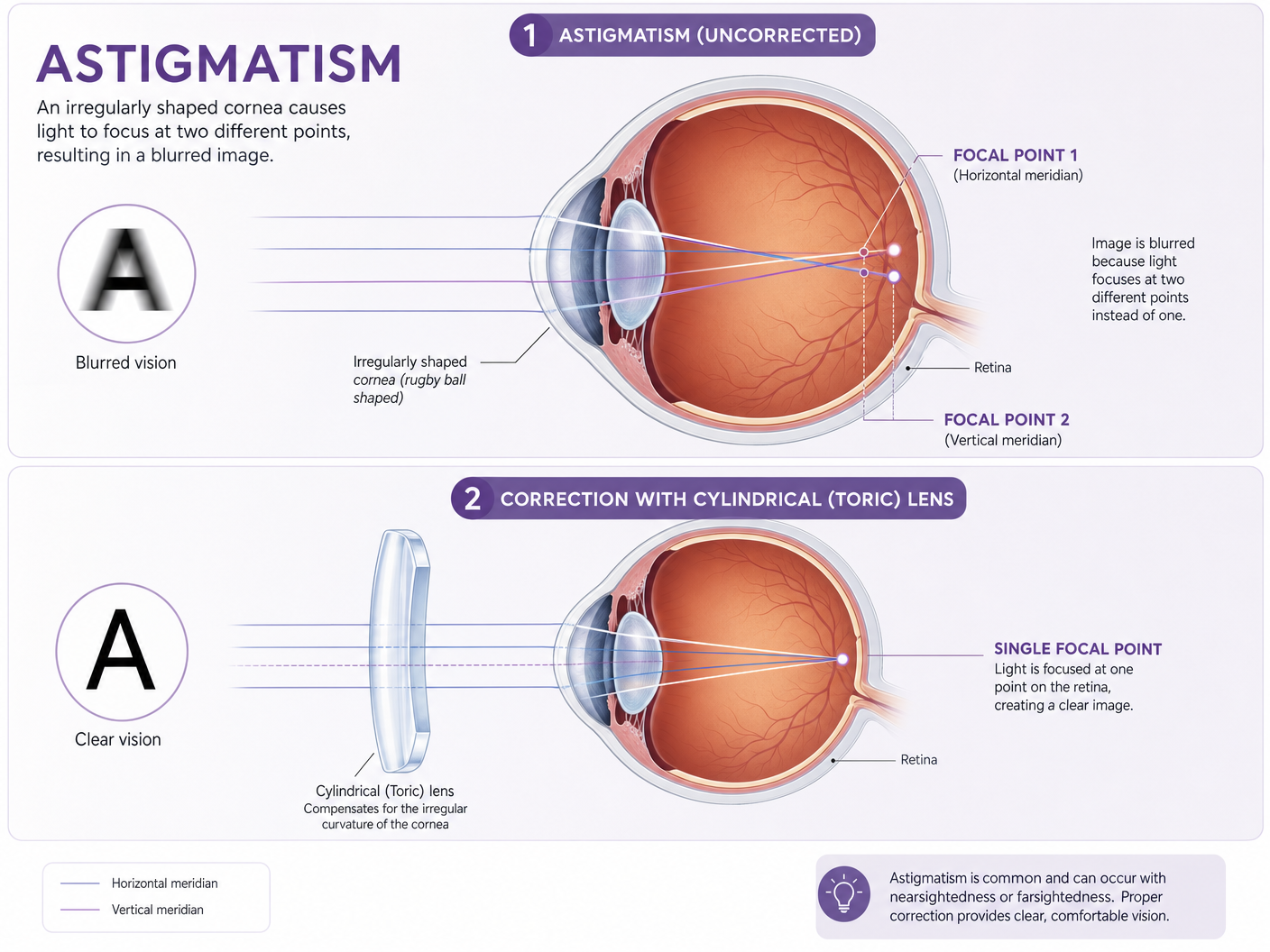
Astigmatism is a common and treatable imperfection in the curvature of your eye that causes blurred distance and near vision. In a normal eye, the cornea and lens have a smooth, equal curve, focusing light rays sharply onto the retina. However, with astigmatism, your cornea or lens has an irregular shape, meaning light rays aren’t refracted properly. This refractive error distorts or blurs your vision at all distances.
At Barossa Eye Clinic, located in Gawler, South Australia, Dr Deric De Wit and Dr Andrew Laming provide comprehensive assessments and personalized management plans for patients experiencing visual disturbances due to astigmatism. Understanding your condition is the first step toward achieving clearer vision.
Common Symptoms of Astigmatism
Symptoms of astigmatism vary, and some with mild astigmatism may not notice significant changes. However, common signs often include:
- Blurred or distorted vision: Objects may appear fuzzy or wavy at both near and far distances.
- Eyestrain or discomfort: Prolonged visual tasks, such as reading or computer use, can lead to tired, aching eyes.
- Headaches: Frequent headaches, particularly after reading or focusing for long periods.
- Difficulty with night vision: Glare or halos around lights, making night driving challenging.
- Squinting: A natural tendency to squint to see more clearly.
If you experience any of these symptoms, a comprehensive eye examination at our Gawler clinic can help determine if astigmatism is the cause.
Causes and Risk Factors
Astigmatism is typically caused by an irregularly shaped cornea (corneal astigmatism) or lens (lenticular astigmatism). While the exact reason for these shape differences is unknown, several factors can contribute:
- Genetics: Often runs in families and is frequently present from birth.
- Eye surgery: Certain types of eye surgery, like cataract surgery, can sometimes induce astigmatism.
- Eye injury or trauma: Scarring on the cornea from an injury can alter its shape.
- Keratoconus: A progressive eye disease where the cornea thins and bulges outward, leading to significant astigmatism.
It is important to note that reading in low light, sitting too close to the television, or squinting does not cause or worsen astigmatism.
Diagnosis of Astigmatism
Diagnosing astigmatism requires a comprehensive eye examination. At Barossa Eye Clinic, our experienced ophthalmologists utilize advanced diagnostic technology to accurately measure how your eyes focus light. The process typically involves:
- Visual Acuity Assessment: Reading letters on a distance chart to determine vision clarity.
- Refraction Test: Using a phoropter to measure how your eyes focus light and determine the exact prescription needed.
- Keratometry or Corneal Topography: These tests measure corneal curvature. Keratometry measures steepest and flattest curves, while corneal topography creates a detailed map of the corneal surface, useful for detecting conditions like keratoconus.
Treatment and Management Options
The goal of treating astigmatism is to improve visual clarity and relieve symptoms. Depending on severity and lifestyle, several options for astigmatism correction SA are available:
Corrective Lenses
For many, prescription eyeglasses or contact lenses are the most straightforward and effective way to manage astigmatism. These lenses are specially designed to counteract the uneven curvature, allowing light to focus correctly on the retina.
Refractive Surgery
For those seeking a more permanent solution, refractive surgery may be an option. Procedures such as LASIK (Laser-Assisted In Situ Keratomileusis) or PRK (Photorefractive Keratectomy) use a laser to reshape the cornea, correcting the refractive error. Your ophthalmologist will evaluate your eye health to determine suitability.
Toric Intraocular Lenses (IOLs)
If you have astigmatism and are undergoing cataract surgery, a toric intraocular lens can be implanted. This specialized lens corrects astigmatism simultaneously, potentially reducing or eliminating your need for glasses after surgery.
When to Seek Help
Schedule an eye examination if vision problems affect your daily activities. Regular eye exams are crucial, especially for children, as undiagnosed astigmatism can impact school performance. If you notice sudden changes in vision, such as increased blurriness, double vision, or severe eye pain, seek prompt medical evaluation.
Frequently Asked Questions (FAQ)
Can astigmatism worsen over time?
Yes, astigmatism can change throughout your life. It may slowly progress or shift as you age, which is why regular eye examinations are important to ensure your prescription remains accurate and your eyes remain healthy.
Is astigmatism a disease?
No, astigmatism is not an eye disease; it is simply a refractive error, meaning it is a problem with how the eye focuses light.
Can I wear contact lenses if I have astigmatism?
Yes, many people with astigmatism successfully wear contact lenses. Toric contact lenses are specifically designed to correct astigmatism and are available in various materials.
Book Your Consultation in Gawler
If you are experiencing blurred vision or suspect you may have astigmatism, the team at Barossa Eye Clinic is here to help. Dr Deric De Wit and Dr Andrew Laming offer comprehensive evaluations and personalized treatment plans for patients across the Barossa Valley and South Australia.
No referral needed — call 1300 107 393 to schedule your appointment at our clinic located at 10 Seventh Street, Gawler SA 5118.
Related Conditions
Disclaimer: The information provided on this page is for educational purposes only and does not constitute medical advice. Individual symptoms, diagnoses, and treatment outcomes may vary. All medical and surgical procedures carry risks. Please consult with a qualified healthcare professional, such as an ophthalmologist or optometrist, for a comprehensive evaluation and personalized advice regarding your eye health.