Myopia (Short-Sightedness)
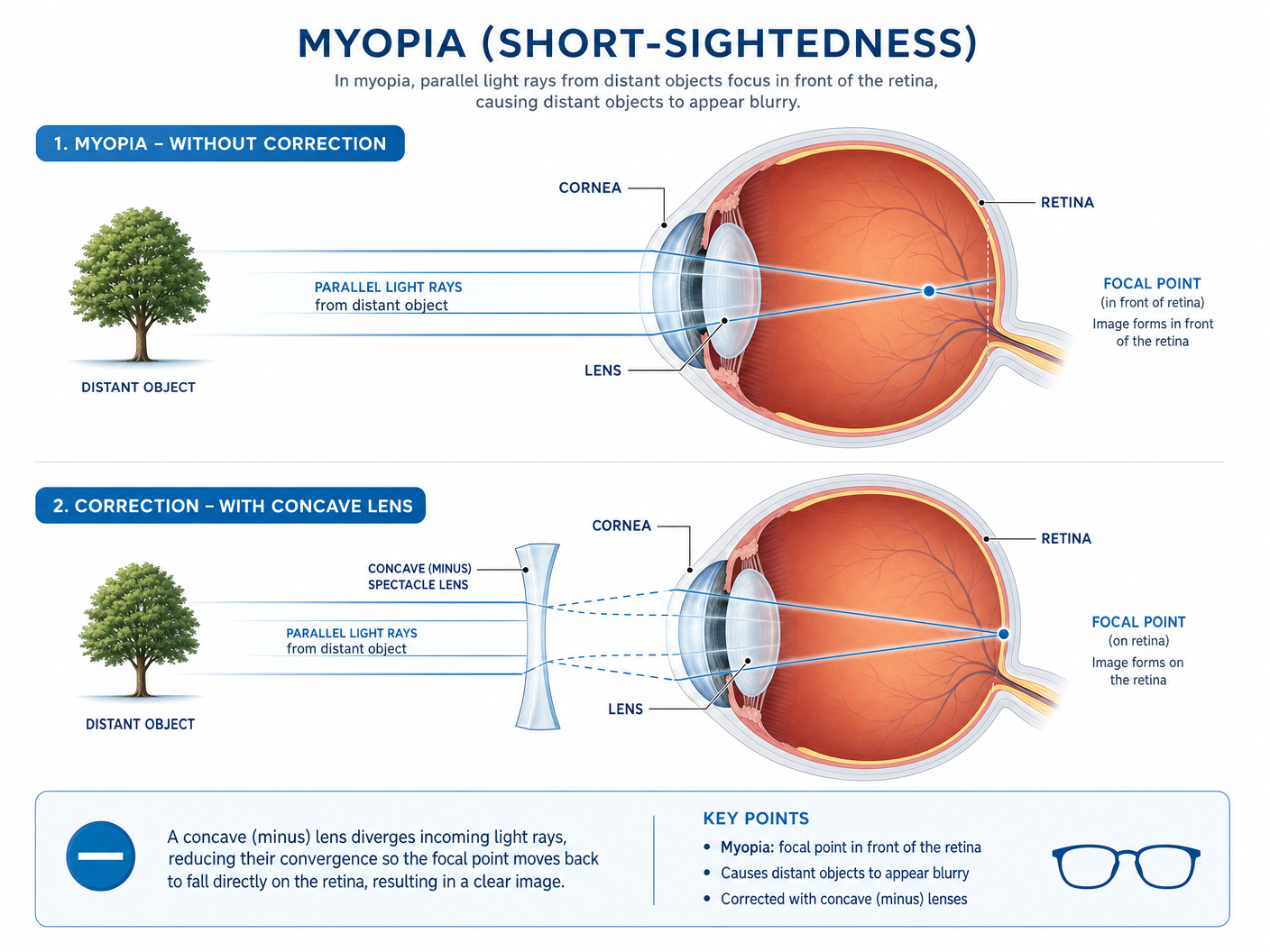
Myopia, commonly known as short-sightedness or near-sightedness, is a prevalent vision condition where close objects appear clear, but distant objects look blurry. It occurs when the eyeball is too long or the cornea (the front surface of the eye) is too steeply curved, causing light rays to focus in front of the retina instead of directly on it. At Barossa Eye Clinic in Gawler, South Australia, our dedicated ophthalmologists, Dr. Deric De Wit and Dr. Andrew Laming, provide comprehensive diagnosis and advanced treatment options for myopia, helping patients in the Barossa Valley and surrounding regions achieve optimal vision.
What is Myopia (Short-Sightedness)?
Myopia is a refractive error, meaning the eye does not bend or refract light properly to a single focus to see images clearly. For individuals with myopia, the focal point of light falls short of the retina, leading to blurred distance vision. This condition typically develops during childhood and adolescence, often stabilising in early adulthood, though it can progress or even develop later in life. Early detection and management are crucial, especially in children, to slow its progression and reduce the risk of associated eye health complications.
Symptoms of Myopia
The primary symptom of myopia is blurred distance vision. However, other signs and symptoms may indicate the presence of short-sightedness. These can include:
- Difficulty seeing distant objects clearly, such as road signs or the whiteboard at school.
- Squinting or partially closing the eyelids to see more clearly.
- Headaches caused by eyestrain.
- Eye fatigue or discomfort.
- Difficulty with night driving due to glare and halos around lights.
- Children may sit closer to the television, hold books very close, or seem unaware of distant objects.
Causes and Risk Factors for Myopia
Causes
The exact cause of myopia is complex and believed to be a combination of genetic and environmental factors:
- Genetics: Myopia often runs in families. If one or both parents are myopic, their children have a significantly higher chance of developing the condition.
- Eye Growth: The most common cause is an eyeball that grows too long from front to back.
- Corneal Curvature: A cornea that is too steeply curved can also contribute to myopia.
- Lens Shape: In some cases, the lens inside the eye may be too thick or too curved.
Risk Factors
Several factors can increase an individual’s risk of developing or progressing myopia:
- Family History: A strong genetic predisposition is a significant risk factor.
- Increased Near Work: Prolonged periods spent on close-up activities, such as reading, using computers, or playing video games, especially during childhood, are associated with a higher risk.
- Limited Outdoor Time: Studies suggest that spending less time outdoors, particularly in natural light, may contribute to the development and progression of myopia.
- Ethnicity: Certain ethnic groups have a higher prevalence of myopia.
- Age: Myopia typically develops during school-age years and can progress throughout adolescence.
Diagnosing Myopia
Diagnosing myopia involves a comprehensive eye examination performed by an ophthalmologist. At Barossa Eye Clinic, our specialists use a range of tests to accurately assess your vision and eye health:
- Visual Acuity Test: This common test measures how clearly you can see letters on a chart from a specific distance.
- Refraction Assessment: Using a phoropter or automated refractor, the ophthalmologist determines the precise lens prescription needed to correct your vision.
- Slit-Lamp Examination: This allows for a detailed examination of the front structures of your eye, including the cornea, iris, and lens.
- Retinal Examination: After dilating your pupils, the ophthalmologist examines the retina and optic nerve at the back of your eye to check for any associated complications.
- Corneal Topography: In some cases, detailed mapping of the corneal surface may be performed.
Myopia Treatment Options
The goal of myopia treatment is to correct the refractive error and, where possible, slow its progression. The most common treatments include:
- Prescription Glasses: The simplest and most common method to correct blurred distance vision.
- Contact Lenses: Offer a wider field of vision and are a popular alternative to glasses for many individuals.
- Refractive Surgery: Procedures like LASIK, PRK, and SMILE can permanently reshape the cornea to correct myopia. These are typically considered for adults with stable prescriptions.
- Myopia Control Treatments (for children): For children with progressive myopia, treatments aimed at slowing the progression of the condition are available. These include:
- Atropine Eye Drops: Low-dose atropine drops have shown effectiveness in slowing myopia progression.
- Specialty Contact Lenses: Orthokeratology (Ortho-K) lenses worn overnight to temporarily reshape the cornea, or multifocal contact lenses, can help manage myopia progression.
- Specialty Glasses Lenses: Certain spectacle lenses designed with peripheral defocus can also help.
Our ophthalmologists at Barossa Eye Clinic will discuss the most suitable treatment plan based on your age, lifestyle, and the severity of your myopia.
When to Seek Help for Myopia
It is important to seek professional eye care if you or your child experience any symptoms of myopia. Regular eye examinations are vital, especially for children, as myopia can progress rapidly during developmental years. If you notice any changes in your distance vision, persistent headaches, or difficulty with daily activities due to blurry vision, schedule an appointment with an ophthalmologist. Early intervention can prevent further vision deterioration and allow for timely management of the condition.
Frequently Asked Questions about Myopia
Q: Can myopia be cured?
A: While myopia cannot be