Periocular & Eyelid Skin Cancer
The skin around the eyes, known as the periocular region, and the eyelids themselves are particularly susceptible to skin cancer. This is due to their delicate nature and frequent exposure to ultraviolet (UV) radiation. At Barossa Eye Clinic in Gawler, South Australia, our experienced ophthalmologists, Dr. Deric De Wit and Dr. Andrew Laming, specialise in the diagnosis and treatment of these sensitive and critical conditions. Early detection and appropriate management are crucial to preserving both vision and the aesthetic appearance of the eye area.
What is Periocular & Eyelid Skin Cancer?
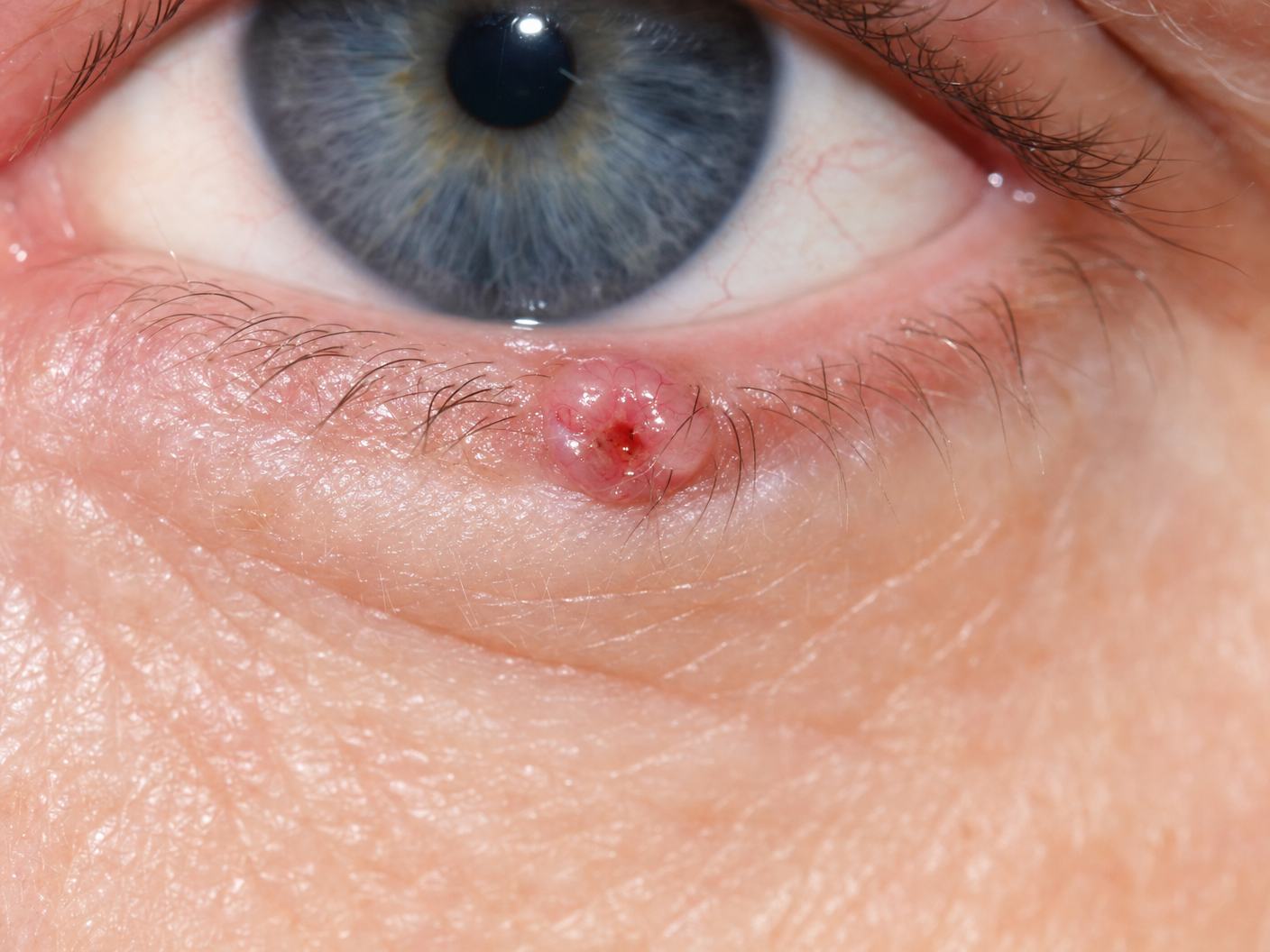
Periocular and eyelid skin cancers are abnormal growths of cells that develop on or around the eyelids. These cancers can arise from various types of skin cells, with the most common forms being basal cell carcinoma (BCC), squamous cell carcinoma (SCC), and melanoma. While BCCs are the most prevalent and generally slow-growing, SCCs can be more aggressive, and melanomas, though rarer, are the most serious due to their potential to spread. Given the vital functions of the eyelids – protecting the eye, distributing tears, and contributing to facial expression – any suspicious lesion in this area warrants prompt medical attention.
Symptoms
Recognising the early signs of periocular and eyelid skin cancer is key to effective treatment. Symptoms can vary but often include:
- A new lump or bump: This may be pearly, waxy, red, or dark in colour.
- A sore that doesn’t heal: Any persistent ulcer or sore on the eyelid that bleeds, crusts, or scabs and does not resolve within a few weeks.
- Changes in an existing mole or lesion: Look for changes in size, shape, colour, or texture.
- Loss of eyelashes: Localised loss of eyelashes (madarosis) can be a subtle but important sign.
- Chronic inflammation or irritation: Persistent redness, swelling, or irritation of the eyelid that doesn’t respond to typical treatments.
- Distortion of the eyelid structure: The eyelid may appear notched, thickened, or have an altered contour.
- Bleeding or discharge: Unexplained bleeding or a persistent discharge from the lesion.
Causes/Risk Factors
The primary cause of most skin cancers, including those affecting the periocular region, is excessive exposure to ultraviolet (UV) radiation from the sun. However, several other factors can increase an individual’s risk:
- UV Radiation Exposure: Prolonged and unprotected exposure to sunlight, especially in sunny climates like South Australia, is the leading risk factor.
- Fair Skin: Individuals with fair skin, light-coloured eyes, and red or blonde hair are more susceptible.
- Age: The risk generally increases with age, as cumulative sun exposure takes its toll.
- Previous Skin Cancer: A history of skin cancer elsewhere on the body increases the likelihood of developing it on the eyelids.
- Weakened Immune System: Immunosuppression, whether due to medication or medical conditions, can increase risk.
- Genetic Predisposition: A family history of skin cancer can indicate a higher genetic risk.
- Certain Genetic Syndromes: Rare genetic conditions can predispose individuals to skin cancers.
Diagnosis
Diagnosing periocular and eyelid skin cancer typically involves a thorough examination by an ophthalmologist. At Barossa Eye Clinic, our specialists will carefully inspect the lesion and surrounding tissues. This may include:
- Detailed Ophthalmic Examination: A comprehensive check of the eye and surrounding structures using specialised equipment.
- Biopsy: If a suspicious lesion is identified, a small tissue sample will be taken and sent to a laboratory for histopathological analysis. This is the definitive method for confirming the presence and type of cancer.
- Imaging: In some cases, imaging techniques such as optical coherence tomography (OCT) or ultrasound may be used to assess the extent of the lesion, though biopsy remains the gold standard.
Treatment
Treatment for periocular and eyelid skin cancer is highly individualised, depending on the type, size, location, and aggressiveness of the cancer. The primary goal is to completely remove the cancer while preserving as much healthy tissue as possible, maintaining eyelid function, and achieving a good cosmetic outcome. Common treatment modalities include:
- Surgical Excision: This involves surgically removing the cancerous tissue. For eyelid cancers, this often requires meticulous reconstruction to ensure proper eyelid function and appearance.
- Mohs Micrographic Surgery: A specialised surgical technique where the cancer is removed layer by layer, with each layer examined under a microscope until all cancer cells are gone. This method maximises the removal of cancer while sparing healthy tissue, making it ideal for cosmetically sensitive areas like the eyelids.
- Cryotherapy: Freezing the cancerous cells with liquid nitrogen.
- Radiation Therapy: Using high-energy rays to destroy cancer cells, often used for larger tumours or when surgery is not feasible.
- Topical Chemotherapy: Applying anti-cancer creams directly to the skin for superficial lesions.
Our team at Barossa Eye Clinic will discuss the most appropriate treatment plan with you, ensuring you understand all options and expected outcomes.
When to Seek Help
It is important to seek prompt medical attention if you notice any new or changing lesions on your eyelids or around your eyes. Early detection significantly improves treatment outcomes and reduces the risk of complications. If you have a family history of skin cancer, have had significant sun exposure, or notice any of the symptoms listed above, we encourage you to schedule an appointment with an ophthalmologist at Barossa Eye Clinic in Gawler.
FAQ
Q: Can eyelid skin cancer spread to my eye?
A: While most eyelid skin cancers are localised, aggressive types like melanoma or advanced squamous cell carcinoma can potentially spread to the eye or surrounding structures if not treated promptly. Regular checks and early intervention are crucial.
Q: Is surgery always necessary for eyelid skin cancer?
A: Surgery is the most common and often most effective treatment for eyelid skin cancer, especially for basal cell and squamous cell carcinomas. However, depending on the type, size, and location of the cancer, other treatments like radiation therapy or topical chemotherapy may be considered, particularly for superficial lesions or when surgery is not an option.
Q: How can I protect my eyelids from sun damage?
A: Protecting your eyelids from sun damage is vital. This includes wearing sunglasses that block 99-100% of UVA and UVB rays, wearing a wide-brimmed hat, and applying sunscreen specifically formulated for the face and eye area. Limiting direct sun exposure during peak UV hours (10 am to 4 pm) is also recommended, especially in the strong South Australian sun.
Book Your Consultation Today
If you are concerned about a lesion on your eyelid or around your eye, don’t delay seeking expert advice. Our dedicated team at Barossa Eye Clinic is here to provide comprehensive care. No referral needed — call 1300 107 393 to schedule your appointment with Dr. De Wit or Dr. Laming. We are conveniently located at 10 Seventh Street, Gawler SA 5118, serving the Barossa Valley and wider South Australian community.
Related Conditions
Clinical Disclaimer: The information provided on this page is intended for general educational purposes only and does not constitute medical advice. It is not a substitute for professional medical diagnosis, treatment, or care. Always seek the advice of a qualified healthcare professional, such as an ophthalmologist, for any questions regarding your medical condition or treatment. Individual results may vary, and the suitability of any treatment should be discussed with your doctor. Barossa Eye Clinic does not endorse any specific products or services mentioned herein. Please consult with Dr. Deric De Wit or Dr. Andrew Laming at Barossa Eye Clinic for personalised medical advice.