Eyelid Malposition – Ectropion & Entropion | Barossa Eye Clinic
At Barossa Eye Clinic, serving Gawler, the Barossa Valley, and wider South Australia, our ophthalmologists, Dr. Deric De Wit and Dr. Andrew Laming, specialize in diagnosing and treating eyelid malpositions like ectropion and entropion. These common conditions can cause discomfort and impact vision if untreated. We provide compassionate, expert care to restore comfort and protect your eye health.
What is Eyelid Malposition?
Eyelid malposition occurs when the eyelid turns outwards (ectropion) or inwards (entropion). Both affect eyelid function, which is crucial for eye protection, tear distribution, and clear vision. Incorrect eyelid positioning can expose the eye, leading to irritation or infection.
Ectropion
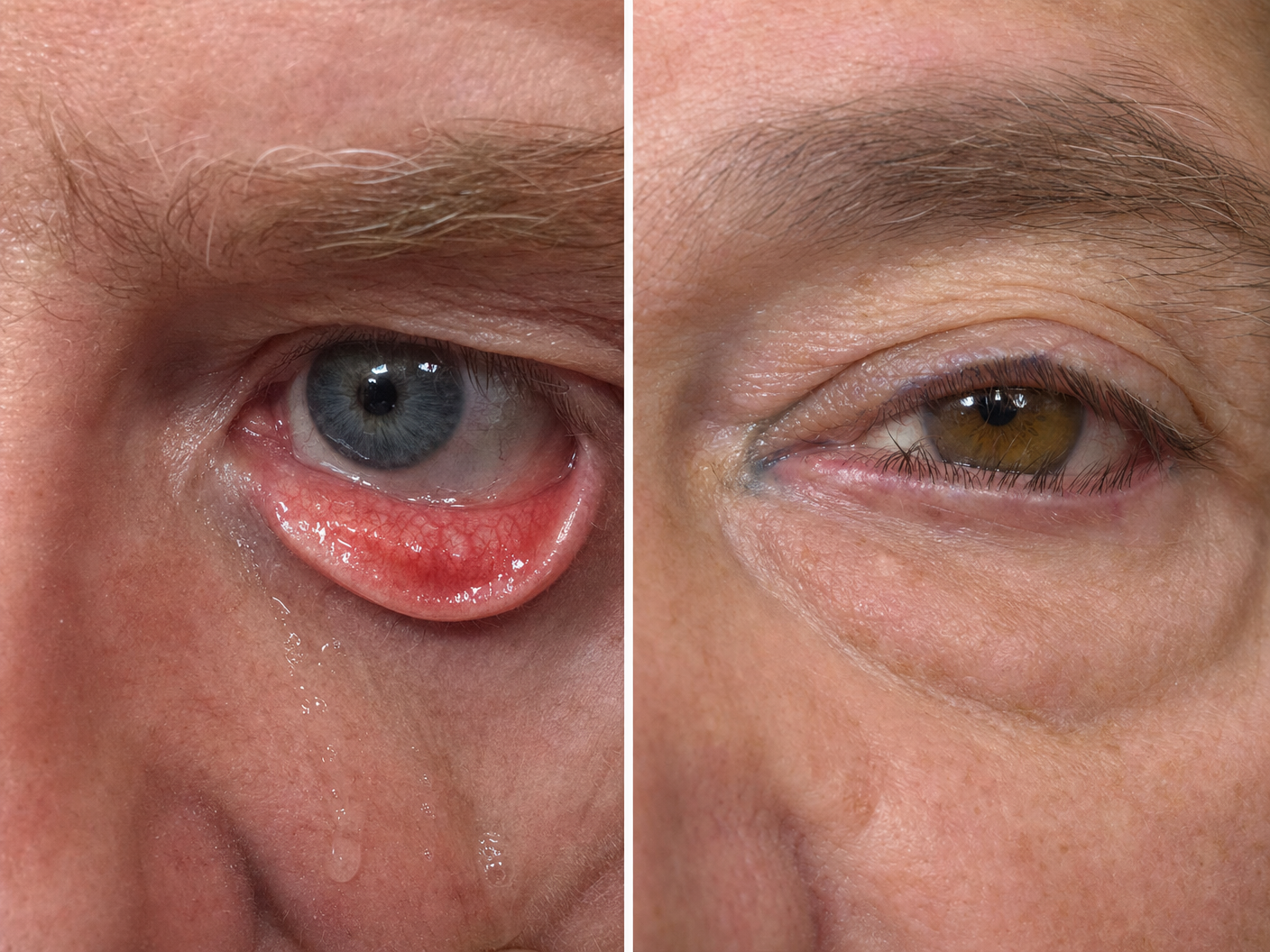
Ectropion is when the lower eyelid turns outwards, exposing its inner surface and the conjunctiva. This leads to symptoms and potential complications, most commonly affecting the lower eyelid and often associated with aging.
Entropion
Entropion is the opposite: the eyelid turns inwards, causing eyelashes to rub against the eye’s surface (cornea and conjunctiva). This constant friction is irritating and can seriously damage the eye if not addressed.
Symptoms of Eyelid Malposition
Symptoms of ectropion and entropion vary but often include discomfort and visual disturbances. Early recognition aids timely treatment.
Ectropion Symptoms:
- Excessive tearing (epiphora): Tears cannot drain properly, leading to watery eyes.
- Dryness and irritation: Exposed conjunctiva and cornea dry out, causing gritty sensation, burning, and redness.
- Chronic conjunctivitis: Exposed inner eyelid is prone to inflammation and infection.
- Sensitivity to light and wind: Environmental factors worsen discomfort.
- Blurred vision: Due to tear film instability and corneal irritation.
Entropion Symptoms:
- Foreign body sensation: Feeling something in your eye due to eyelashes rubbing the cornea.
- Redness and irritation: Constant friction causes eye and eyelid inflammation.
- Pain and discomfort: Especially with blinking.
- Excessive tearing: Reflex tearing due to irritation.
- Sensitivity to light (photophobia): Common response to corneal irritation.
- Corneal abrasions or ulcers: Serious complication, potentially leading to vision loss if untreated.
Causes and Risk Factors
Both ectropion and entropion are often age-related, but other factors contribute to their development.
Causes of Ectropion:
- Age-related (involutional): Weakening of eyelid muscles and ligaments, a natural part of aging.
- Paralytic: Facial nerve paralysis (e.g., Bell’s palsy) weakens eyelid muscles.
- Cicatricial: Scarring around the eyelid from trauma, burns, surgery, or skin conditions, pulling the eyelid outwards.
- Mechanical: Tumors or growths near the eyelid can weigh it down, causing it to turn out.
Causes of Entropion:
- Age-related (involutional): Similar to ectropion, weakening of eyelid muscles and tissue laxity.
- Spastic: Eyelid spasms caused by eye irritation or inflammation.
- Cicatricial: Scarring on the inner eyelid surface, often from chronic inflammation, infection (like trachoma), or trauma, pulling the eyelid inwards.
- Congenital: Rarely, infants are born with entropion due to abnormal eyelid development.
Diagnosis
Diagnosing eyelid malposition is straightforward, involving a comprehensive eye examination by an ophthalmologist. At Barossa Eye Clinic, our specialists assess your eyelids and eyes to determine the condition’s type and severity.
- Physical examination: Doctor observes eyelid position, blinking, and checks for irritation or damage to the eye surface.
- Eyelid tension test: Assesses laxity of eyelid muscles and tissues.
- Slit lamp examination: Examines cornea and conjunctiva for damage (abrasions, ulcers) caused by entropion.
Treatment for Eyelid Malposition
Surgical correction is the primary treatment for both ectropion and entropion. The goal is to restore normal eyelid position, alleviate symptoms, and protect the eye. Our surgeons at Barossa Eye Clinic in Gawler are highly skilled in these delicate procedures.
Ectropion Treatment:
Ectropion surgery typically tightens and reattaches the eyelid to its normal position. The technique depends on the cause:
- Involutional ectropion: A small eyelid section is removed, and ends are sutured to tighten the lid.
- Cicatricial ectropion: May require skin grafts or reconstructive techniques to release scar tissue pulling the eyelid.
Entropion Treatment:
- Involutional entropion: Involves tightening the eyelid and sometimes repositioning eyelid control muscles.
- Cicatricial entropion: May involve releasing scar tissue or using grafts to reposition the eyelid.
- Temporary measures: Before surgery, lubricating eye drops, ointments, or taping the eyelid can provide temporary irritation relief.
Most eyelid surgeries are outpatient procedures under local anesthesia, allowing same-day return home. Recovery is generally quick, with most patients experiencing significant symptom relief.
When to Seek Help
If you experience persistent eye irritation, excessive tearing, redness, or a foreign body sensation, seek prompt medical attention. Early diagnosis and treatment prevent complications like corneal damage and preserve vision. Contact Barossa Eye Clinic in Gawler for an assessment.
FAQ
Q: Is eyelid surgery painful?
A: Eyelid surgery is typically performed under local anesthesia, so you won’t feel pain during the procedure. Mild discomfort, swelling, and bruising during recovery can be managed with pain medication and cold compresses.
Q: How long does recovery take after eyelid surgery?
A: Most patients recover within a few weeks. Swelling and bruising usually subside within 1-2 weeks, with stitches removed after about a week. Full healing may take a few months, but significant symptom improvement is often noticed sooner.
Q: Will my insurance cover eyelid surgery?
A: Eyelid surgery for ectropion or entropion is often medically necessary to protect eye health and vision, and may be covered by private health insurance or Medicare. We recommend checking with your specific insurance provider for coverage details. Our team at Barossa Eye Clinic can also assist with inquiries.
Ready to Protect Your Eye Health?
If you are experiencing symptoms of eyelid malposition, seek expert care promptly. Our dedicated team at Barossa Eye Clinic is here to help. No referral needed — call 1300 107 393 to schedule your consultation with Dr. De Wit or Dr. Laming. We proudly serve the Barossa Valley, Gawler, and surrounding regions of South Australia.
Related Conditions:
Clinical Disclaimer: This information is for general educational purposes only and does not constitute medical advice. Consult a qualified ophthalmologist for diagnosis and treatment of any eye condition. Individual results may vary. Barossa Eye Clinic does not endorse any specific treatment without professional assessment.